Services

A company I was talking to the other day was doing everything right on paper. They built a personalized report for every target account with numbers specific to each organization.
They mailed it out to hundreds of accounts and, two months later, have heard nothing back.
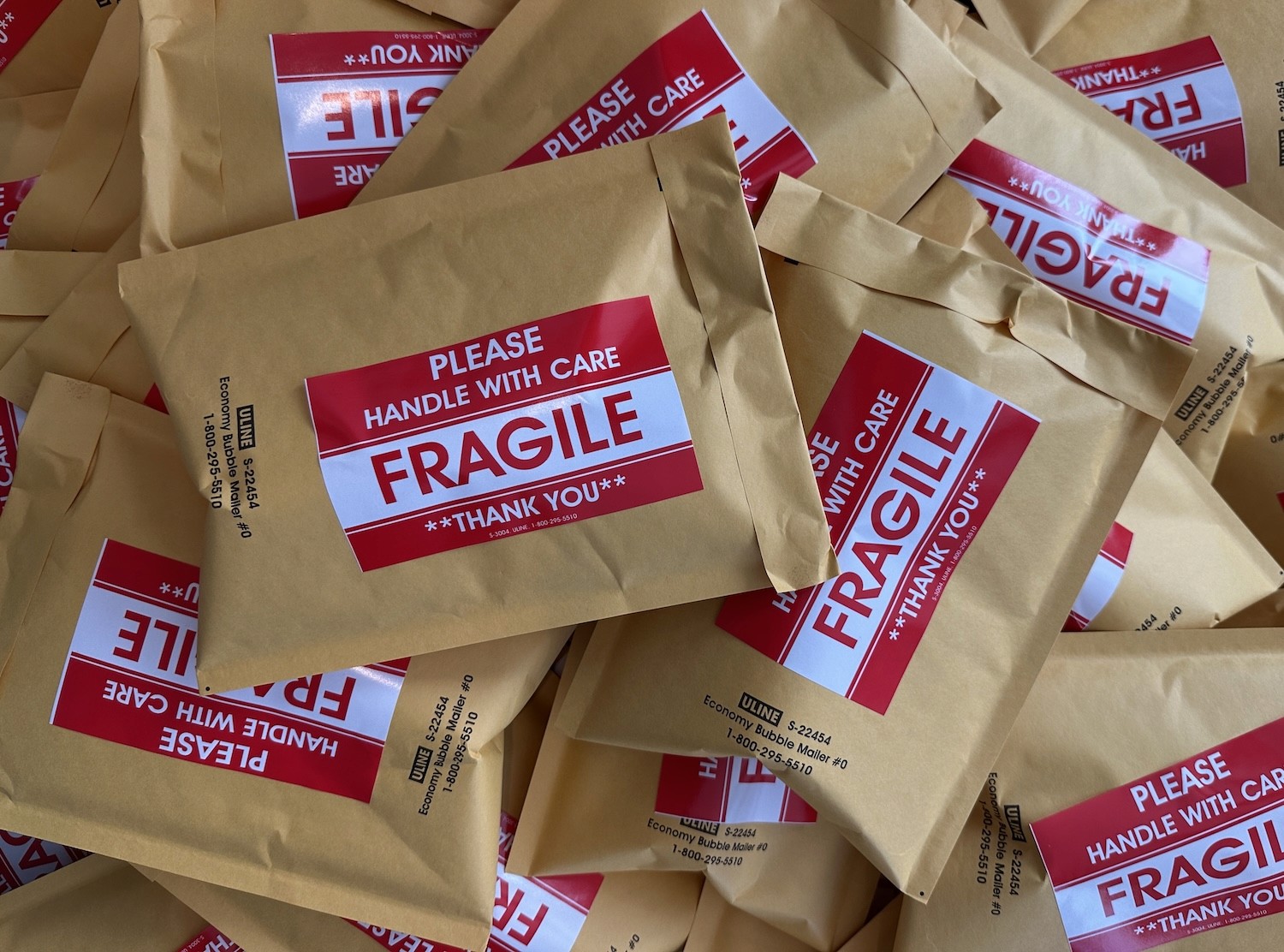
I know they had spent a lot of time putting together packets, verifying addresses, and mailing them out individually.
Here's the problem, though. Every SaaS company in that space is doing the same thing. It's like everyone is using the same playbook with two degrees of variation.
Why Does the Item Matter More Than the Message?
This is where we do things a little bit differently.
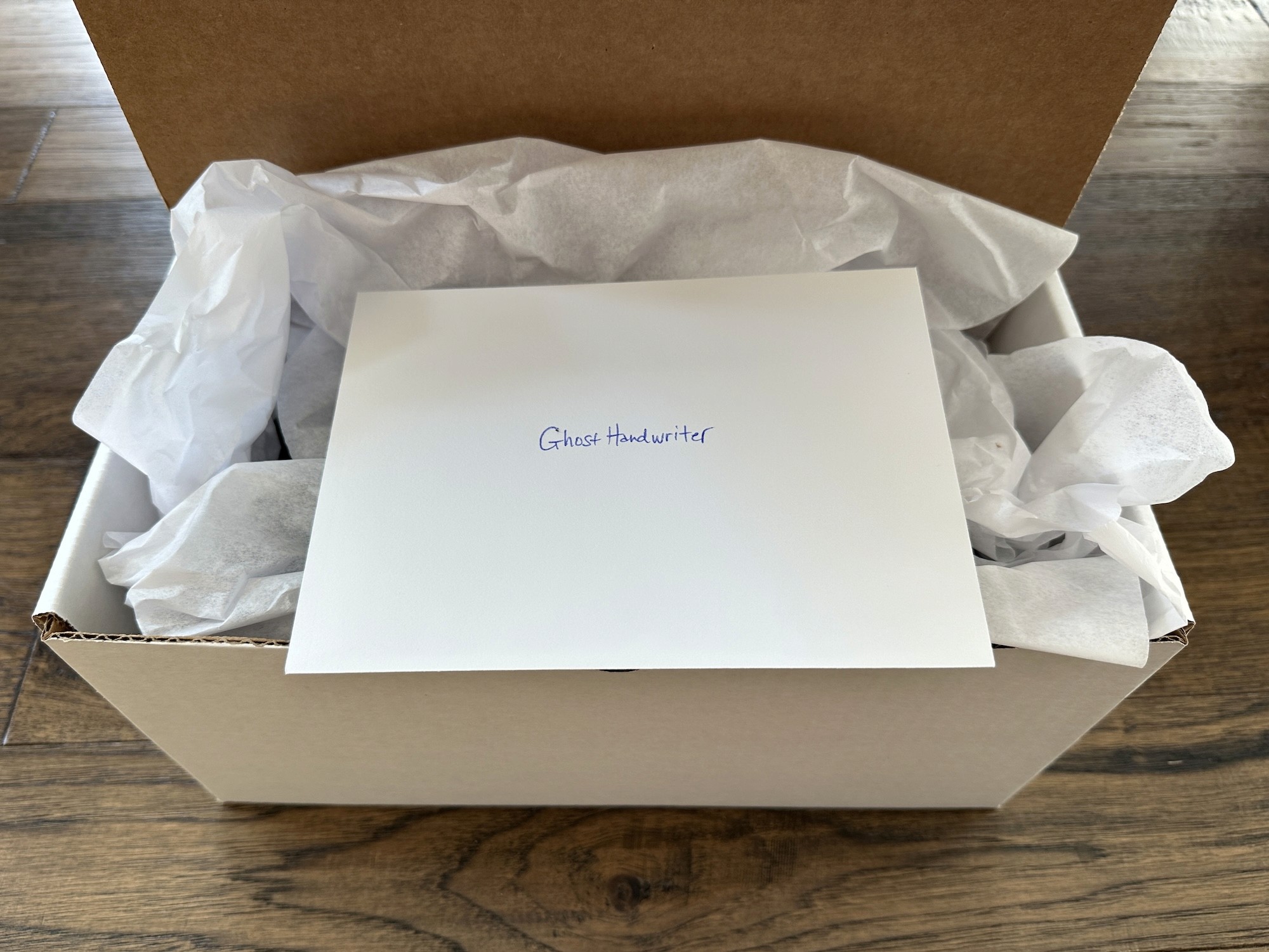
We try to understand what your company does and why somebody should buy your product or service. Then we pair it with an entire strategy full of physical objects and handwritten cards to drive the message home.
Are you solving a pain point? Are you giving them time back? Are you reducing costs?
These are the heart of every GhostHandwriter campaign.
What Should You Actually Send?
Turn the pain you solve into a physical object.
We were building a campaign for a company that automates document processing for medical practices. The pain is real and specific: a referral coordinator drowning in faxes, paper stacks, and email attachments, running a mental checklist on every single one, and burning out. That's the feeling we're after.
So what does that feel like physically? Stress. The urge to hit something.
An inflatable punching bag. Or boxing gloves. Card on top that says something like: we know how stressful it is to process documents all day, so here's a head start on the stress relief.
Nobody is sending boxing gloves. Literally no one.
This item was thoughtfully decided to match a campaign strategy and paired with the right messaging.
Isn't That Just Being Weird for the Sake of It?
There's a difference between random and disruptive.
Random is sending a puzzle to a CFO because puzzles are fun. There's no line connecting the object to why you're writing.
Disruptive is sending something so specific to their world that they can't help but notice and chatter around the office. We're engineering pattern disruption.
Here's the test I use: what does your prospect currently receive from companies like yours?
Brochures. Pens. Koozies. Stress balls. LinkedIn messages. Cold email.
Anything on that list is predictable, which means it gets filtered out pretty quickly. Send anything outside of that list and commands attention and you've got a captivated audience.
Should You Put Your Logo On It?
No. Put your logo on the card.
This is straight out of Giftology, and I've watched it play out in my own house. My husband is a CTO. Google sent him a Patagonia jacket with the Google logo on it. He has never worn it once, because wearing it means walking around as a billboard.
If they had sent the same jacket unbranded, he would have worn it for years. And every single time somebody said "nice jacket," he would have remembered exactly who sent it.
A good gift does not need your logo to be remembered. It needs to be good enough that they remember anyway. The handwritten card carries your name.
Branded items get used in the office and then thrown out. Unbranded items make it home.
How Much Should You Spend?
Somewhere between $15 and $25 for the item on a real ABM list, plus around $8 to $10 for shipping depending on size and weight.
But there's a question you need to answer before the budget question: what is your prospect actually allowed to accept?
Healthcare, financial services, and government contacts all have gift policies. Some cap at $25. Some at $100. Some prohibit gifts entirely from unapproved vendors. Creating a $60 idea and then finding out your recipient has to send it back is just poor planning.
Who Should It Go To?
We get asked this question often and the short answer is: the highest-ranking person you can actually verify.
Most companies, you can find the name of the CEO, President, or the highest-ranking executive, but sometimes it's trickier to find the name of the likely decision-maker.
In which case, we always advise our clients to send it to the highest-ranking person that we can verify and trust that the messaging and the item will end up in the hands of the relevant party.
I've had this happen to me over and over. I send to the CEO, and the marketing person books the call. Their boss handed it to them and said "check this company out."
You cannot engineer that with a brochure. You can engineer it with an object odd enough that somebody is compelled to carry it to another desk to show a coworker.
Does One Send Work?
No. The question I often ask is how long the average sales cycle is for our client, and some companies will say weeks, months, or even years. So the obvious best practice is to build a campaign that matches the sales cycle length.
A single campaign to 200 accounts might produce a few bookings. If you judge the strategy on that, you'll conclude it doesn't work and go back to email.
Physical mail compounds. The second item lands on someone who already remembers the first one. By the third, you're a running joke in the office, in the good way. Did these people send us another one? What did they send us this time?
I've run this for my own business for about two years, sending something small every couple of months. Every single cycle produces referral or repeat business. One client who had gone quiet for over a year came back ready to run a campaign.
What About the Packaging?
This is where we compare ourselves to Apple products. Unboxing and placement are part of the strategy.
We truly take the time to envision what it would be like on the other end, receiving a package like this, and how we want their clients and prospects to experience opening a package.
Steve Jobs was right about unboxing being part of the product.
The Quick Version
Before you order anything, run the item through this:
Does it represent the pain you solve, or just your brand?
Is it something they already get from vendors like you? If yes, pick something else.
Is it unbranded?
Is it inside their gift policy?
Is it one per account?
Does it connect to what you're sending next?
Would somebody carry it to a coworker's desk?
If you get a no on any of those, the item isn't good enough.
Want Help Picking the Item?
This is the part we actually enjoy. Tell us who you're trying to reach and what problem you solve for them, and we'll figure out what goes in the box, what the card says, and how the successive items tie back to the overall strategy.
We handle the sourcing, the writing, the assembly, and the shipping. Just tell us the outcome you want.
want us to handle it?
Tell us the outcome. We’ll handle the rest.
Handwritten cards and lumpy mail, planned, written, packed, and shipped for you.