Services

You built the list. You know exactly which companies you want and who inside them signs off. Then you sent the sequence, ran the ads, send Linkedin inMail messages, and got nothing back but out of office replies.
The list isn't the problem. The channel is. You picked 200 companies worth six figures each and then tried to reach them through the cheapest and most crowded pipe available.
Here's what you can do instead.
What Is Account-Based Marketing, Exactly?
Demand gen works like fishing with a net. You publish content, run ads, gate a report, and see who bites. ABM flips that. You start with a list of accounts you already know you want and build campaigns aimed at the handful of people inside each one who actually influence the decision.
Size that list at 200 accounts or more. Smaller lists get pitched as ABM all the time, and they do work as a sales motion, but 200 is where you start getting enough responses to tell what's working from what got lucky. Under that, one enthusiastic prospect looks like a trend.
Three things separate real ABM from outbound with a nicer name:
The account is the unit, not the lead. You aren't chasing one contact. You're trying to get four or five people at the same company nodding at the same time.
Sales and marketing work the same list. Same targets, same messaging, same timing. If marketing is running a campaign sales doesn't know about, it isn't ABM.
The message is built for that company. Not for a persona doc. For that company, with their language, their problem, and their specific situation in it.
How Is ABM Different From Demand Gen?
Demand gen is a volume game. Lots of targets, low cost per touch, success measured in leads and form fills. It works when your product is affordable enough that you can afford to be wrong about a lot of people.
ABM is the opposite. Fewer targets, much higher spend per target, success measured in meetings and pipeline. It works when a single closed deal is worth enough to pay for the entire campaign several times over.
That's the simplest test. If one new customer is worth $80,000 to you, a 200 account program at $20 to $40 a touch pays for itself on the first deal and prints money on the second.
If your product is $49 a month, then demand gen is probably the better strategy.
Why Do Most ABM Programs Stall Out?
Because the tactics don't change. They just get pointed at fewer people.
The typical ABM playbook is a personalized email sequence, LinkedIn ads aimed at the target account list, and a custom landing page. All digital. All in channels where your target accounts are already buried.
Think about who you're trying to reach. A VP at a company worth pursuing gets well over a hundred emails a day and has trained herself to delete anything that looks like a pitch in under two seconds. She has ad blockers. Her LinkedIn inbox is a message graveyard.
Personalizing an email doesn't help if the email never gets opened.
The subject line is competing with 130 others, and yours loses on volume alone.
Where Does Direct Mail Fit Into ABM?
Physical mail is the one channel with almost no competition left. Your prospect's inbox has a hundred messages in it. Her desk has a coffee cup and a notebook on it. If something shows up in her hands, she looks at it. There's no filter, no algorithm, and no unsubscribe.
ABM is also the one situation where cost per touch stops mattering much. Spending $30 to reach one decision maker sounds insane when you're running volume plays. When the deal is worth $80,000 and you need three of them this year, then it's a no brainer.
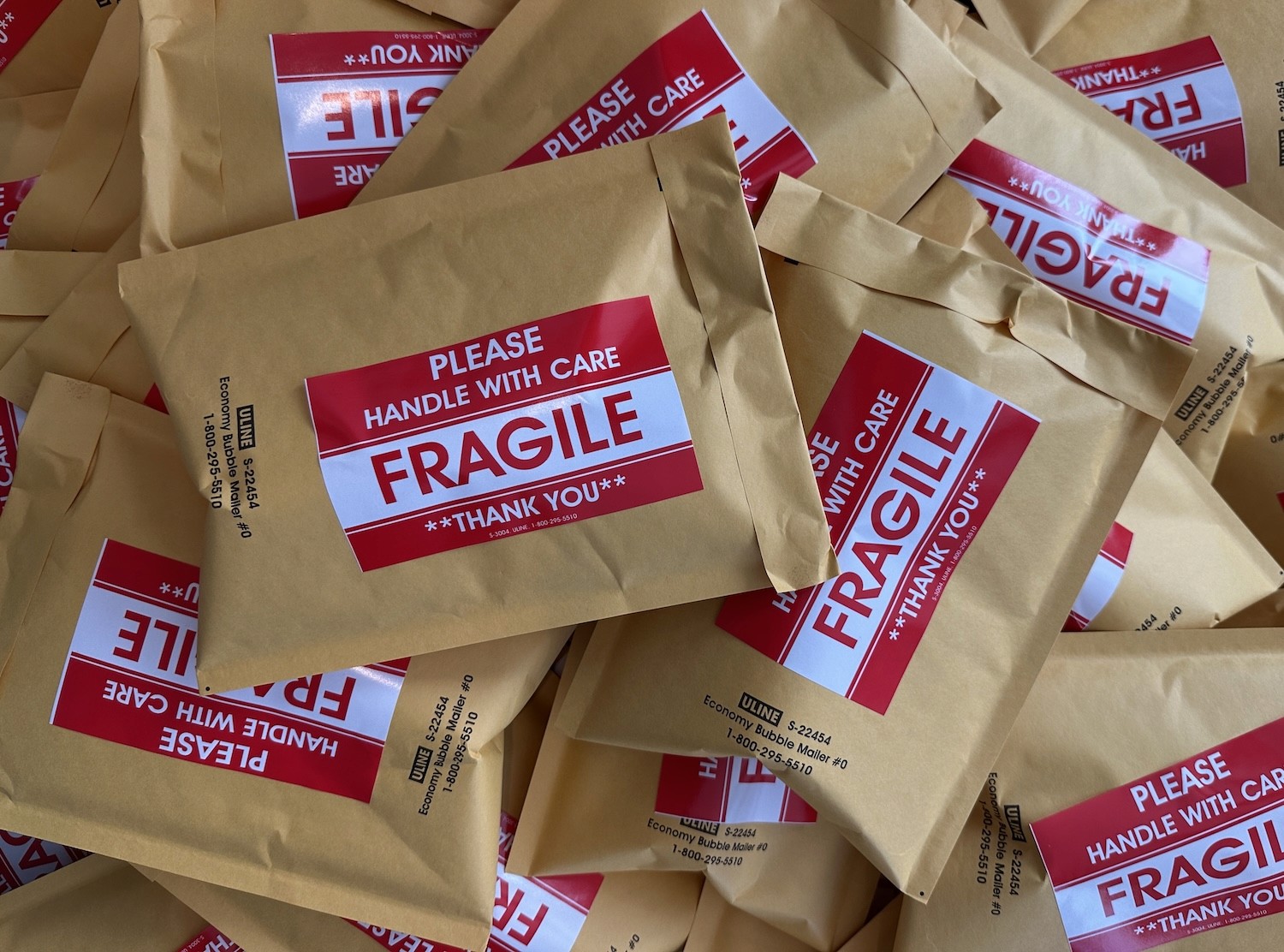
And mail solves the multi-threading problem better than anything digital. An email goes to one person and dies there. A package that sits on a desk gets picked up, asked about, and passed around. Especially if you can get creative and unique items such as messages in bottles.
What Should You Actually Send?
Not a branded stress ball. Not a mug with your logo on it. If your name is the most prominent thing in the box, you sent yourself a gift and mailed it to a stranger.
What works:
Something inexpensive and practical. Spend too much money and you look desperate. But small items, nurtured over time will have a longer lasting impact.
A recognizable brand instead of a generic version. Unbranded items is the way to go. We often think putting our logo on things are impressive...when was the last time you were impressed with someone's L.L. Bean backpack with their name on it. (Psst...never.)
Timing that makes sense. When you send items, especially in a drip-style campaign, think about frequency and seasonality.
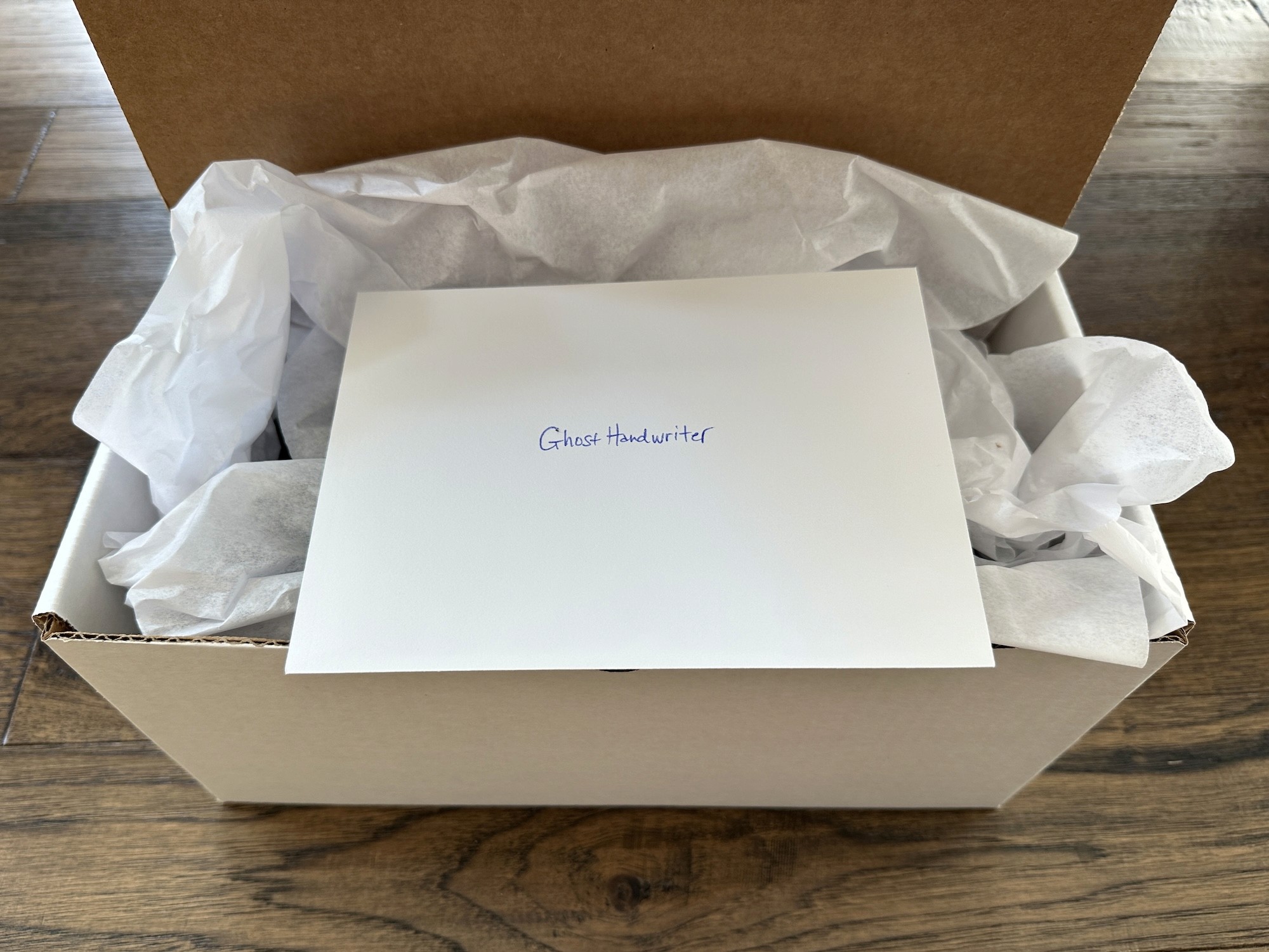
A handwritten card doing the actual talking. The item gets the box opened. The message is what turns it into a conversation.
For your top-tier accounts, the ones where a single yes changes your year, go further and send something they have never received before. A handwritten message rolled inside a glass bottle, for example. Nobody has ever gotten one. They have to unroll it to read it, which means they're invested in the message before they've read a word of it.
And chances are...they're showing it to their coworkers, family, and friends.
How Do You Know If It's Working?
Open rates are gone, and that's fine. At 200 accounts you have enough volume to see real rates instead of anecdotes, and still few enough that you can pull up any single account by name. Watch for:
Meetings booked from the target list
Reply rate on the follow-up, not the send
Whether anyone from that company visits your site in the two weeks after delivery
Pipeline created from named accounts
One more thing, and it's the part people skip. Mail without follow-up is a present, not a campaign.
Know roughly when your package lands, then have sales reach out three to five days later referencing the thing directly. "Did the bottle make it to your desk?" is a much better opener than anything in your sequence right now.
Where Do You Start?
Build the list to at least 200 accounts you genuinely want (or have Ghosthandwriter build it for you.)
Identify three or four people at each one who touch the decision.
Verify the mailing addresses.
Write the message per account, not per persona.
Choose one item that fits the season and the audience.
Send in waves of 50 so you can adjust the message before the whole list is spent.
Follow up on a schedule, not whenever someone remembers.
ABM works when the outreach is worth the account. If you've picked companies worth chasing, act like it.
If you've got a crazy idea you want someone else to fulfill, we can handle that. Tell us the outcome you're after and we'll take care of the rest.
want us to handle it?
Tell us the outcome. We’ll handle the rest.
Handwritten cards and lumpy mail, planned, written, packed, and shipped for you.