Services

Most people think a direct mail campaign starts with the message. Psst...it doesn't.
We think about 2 steps before that by asking:
"What has to happen for someone to even care enough to open this?"
At GhostHandwriter, we send real handwritten cards at scale using robotic handwriting machines that hold an actual pen and write with real ink. BUT we spend far more time thinking about human behavior than we do thinking about the machines. Because...
A beautifully handwritten card that never gets opened is worthless.(yes, worthless.)
And in a world where people are buried under emails, notifications, ads, and AI-generated content, attention has become one of the most valuable currencies in marketing.
So every part of a direct mail campaign matters: the list, the envelope, the texture, the weight, the message, the call to action, the timing, the item inside, and the entire emotional experience of opening it.
The companies getting the best results aren't just sending mail. They're engineering responses.
What Makes a Handwritten Card Different From Regular Direct Mail?
When someone pulls a stack of mail out of the box, they sort it in seconds. A printed envelope with a printed address goes straight into the junk pile. The brain has already seen ten thousand of those.
But a card addressed in real handwriting, with a live stamp, gets a second look. It doesn't pattern-match to "advertisement." It pattern-matches to "someone I know wrote to me."
And that's just the start.
Why Does the Mailing List Matter More Than the Message?
Before we ever talk about handwriting styles or envelope colors, we start with the audience.
Who is receiving this?
That question sounds obvious, but you'd be surprised at how little attention other robot handwriting companies give to messaging.
A card going to a local roofing prospect should not look, feel, or sound like a card going to a hospital executive, a financial advisor, or an ultra-high-net-worth investor. Yet most companies send the exact same templated format to everyone.
The best campaigns match the experience to the recipient. A luxury audience responds to exclusivity and subtlety. A busy operations manager responds to clarity and brevity. A cold prospect needs curiosity. A warm referral needs trust reinforced.
The list drives everything downstream: envelope color, message tone, what goes inside, the call to action, how personal the note gets, and what the follow-up looks like.
Direct mail works best when it feels like it was designed for the one person opening it.
How Do You Get Direct Mail Opened in the First Place?
Most direct mail dies before the message is ever read. That's why the envelope is its own conversion point.
People mentally categorize mail in seconds: bill, junk, advertisement, important, invitation, personal.
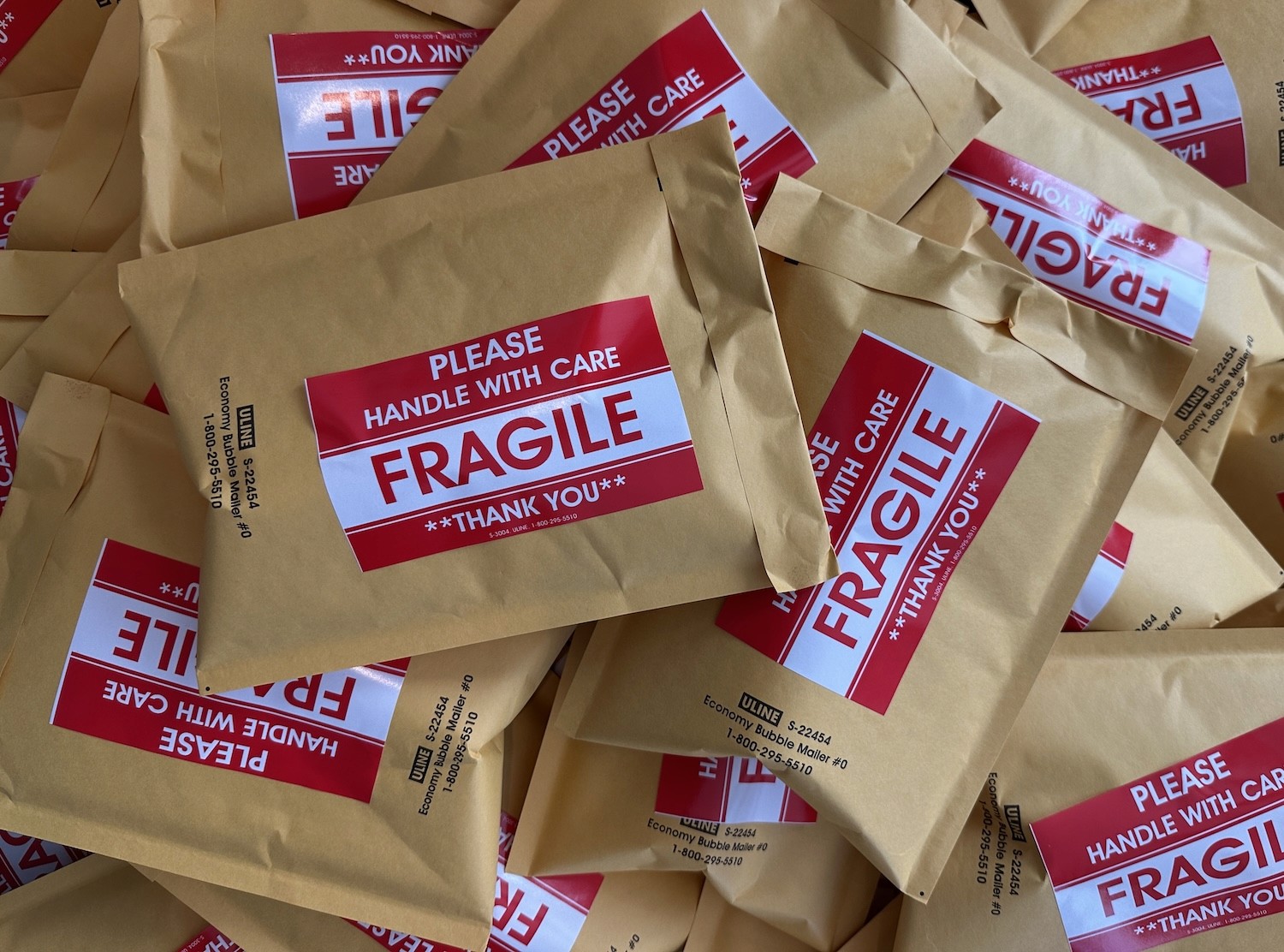
The goal is to avoid looking like everything else. Sometimes that means a colored envelope instead of white. Often it means a handwritten address and a live stamp instead of a printed label and a postage meter mark. Sometimes it means an oversized card, textured paper, a padded mailer, or unusual sizing.
We've watched clients improve engagement dramatically just by changing the outside of the package. Because if the envelope does its job, then the message has a shot at doing its job.
Why Do Gift-Based and Dimensional Campaigns Work So Well?
One of the biggest mistakes handwriting companies make is treating direct mail like printed email. But physical mail has an advantage digital marketing never will: it engages the senses.
People can hold it, feel it, shake it, open it, and interact with it. That fundamentally changes how they remember it.
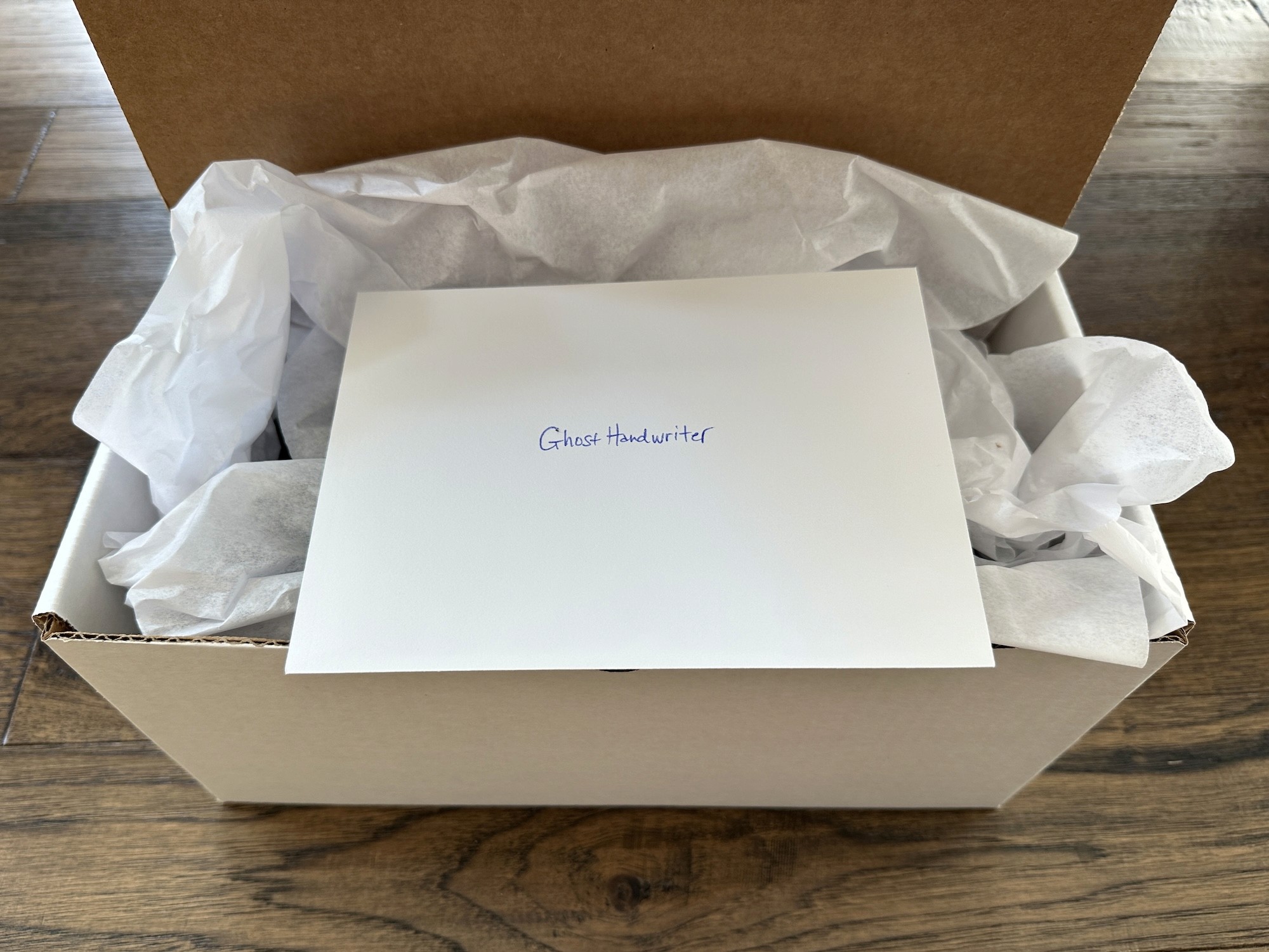
This is why dimensional mail and gift-based campaigns perform. We often help clients think through what to pair with a handwritten note: a business card, a QR code, a gift card, a food item, mints, coffee packets, chocolates, or a small tactile insert.
Not because gifts magically close deals. Because they create interruption and memorability. A padded mailer feels different than a standard envelope. A handwritten note tied to a physical object feels different than a generic postcard. A package someone has to physically engage with earns more mental investment than something tossed in two seconds.
Sometimes the goal isn't immediate conversion.
Sometimes the goal is simple: be unforgettable.
What Should a Handwritten Direct Mail Message Actually Sound Like?
Most direct mail sounds corporate. And corporate language gets ignored, especially in industries where everyone says the same thing.
"Helping you leverage innovative solutions for long-term growth."
B-O-R-I-N-G
The best direct mail sounds like a real person talking to another real person. Shorter sentences. Conversational tone. Clear benefits. Less jargon. Fewer buzzwords. More specificity.
This matters even more with handwritten cards. If the envelope looks personal but the message reads like a press release, you break the spell instantly. The handwriting promises a human wrote this, therefore, the words have to deliver on that promise.
When every company in an industry sounds identical, the one willing to sound human stands out immediately.
We spend a lot of time helping clients simplify their message because we bring an outside perspective.
What Response Should a Direct Mail Campaign Be Designed to Get?
One of the most overlooked questions in marketing is: what exactly are we trying to get someone to do?
Not every campaign should ask for a sale right away. (In fact, most of the time you shouldn't on the intial outreach).
Some are built to start a conversation, schedule a meeting, drive a scan, earn a reply, increase familiarity, re-engage old leads, build top-of-mind awareness, or generate referrals.
We need to define the intended response so we know how to architect the message.
How Does Direct Mail Fit Into a Larger Marketing System?
The strongest campaigns rarely work alone. Handwritten direct mail gets significantly more effective when it's paired with email, phone calls, LinkedIn outreach, retargeting ads, gifting, events, and follow-up sequences.
Why? Because repetition builds familiarity, and familiarity builds trust.
A prospect who sees your LinkedIn ad, receives your handwritten note, gets a follow-up email, and later opens a thoughtful gift is far more likely to remember you than someone who got a single cold touch.
Many of our clients are using multi-channel outreaches and coordinated experiences, with the handwritten card as the touchpoint that feels the most personal.
What Should You Take Away From This?
Direct mail is no longer about printing and postage. The companies seeing the best results are thinking deeper:
How do we get opened?
How do we create curiosity?
How do we become memorable?
What experience are we creating?
What response are we trying to generate?
What happens after the mail arrives?
If you want to be generic then do direct mail the way everyone else is doing.
But if you're willing (and crazy) enough to think outside the box then that's what we do at Ghosthandwriter.
Join the party (err...asylum) by setting up a call.
want us to handle it?
Tell us the outcome. We’ll handle the rest.
Handwritten cards and lumpy mail, planned, written, packed, and shipped for you.